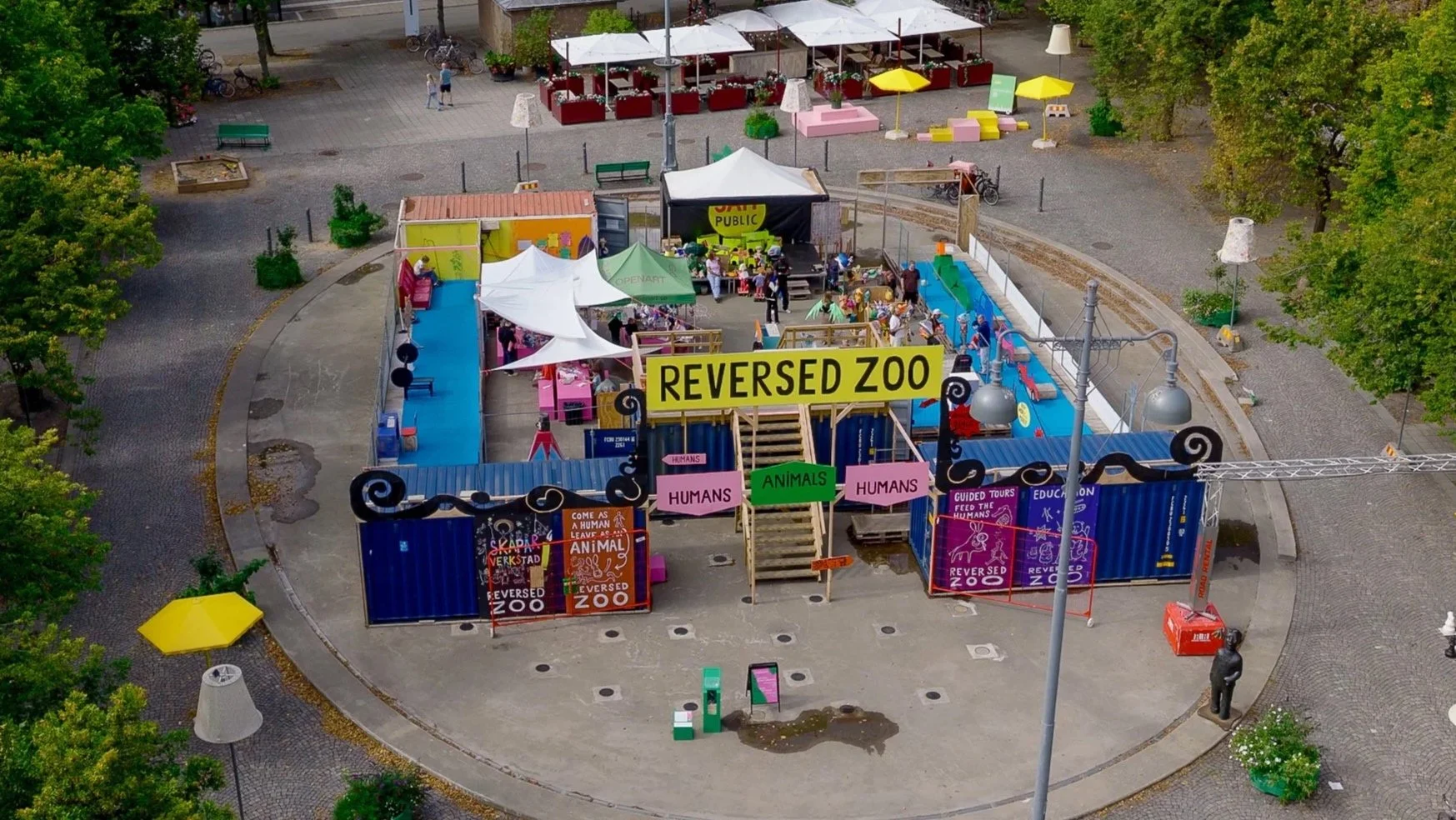
Järntorget, Örebro, Sweden
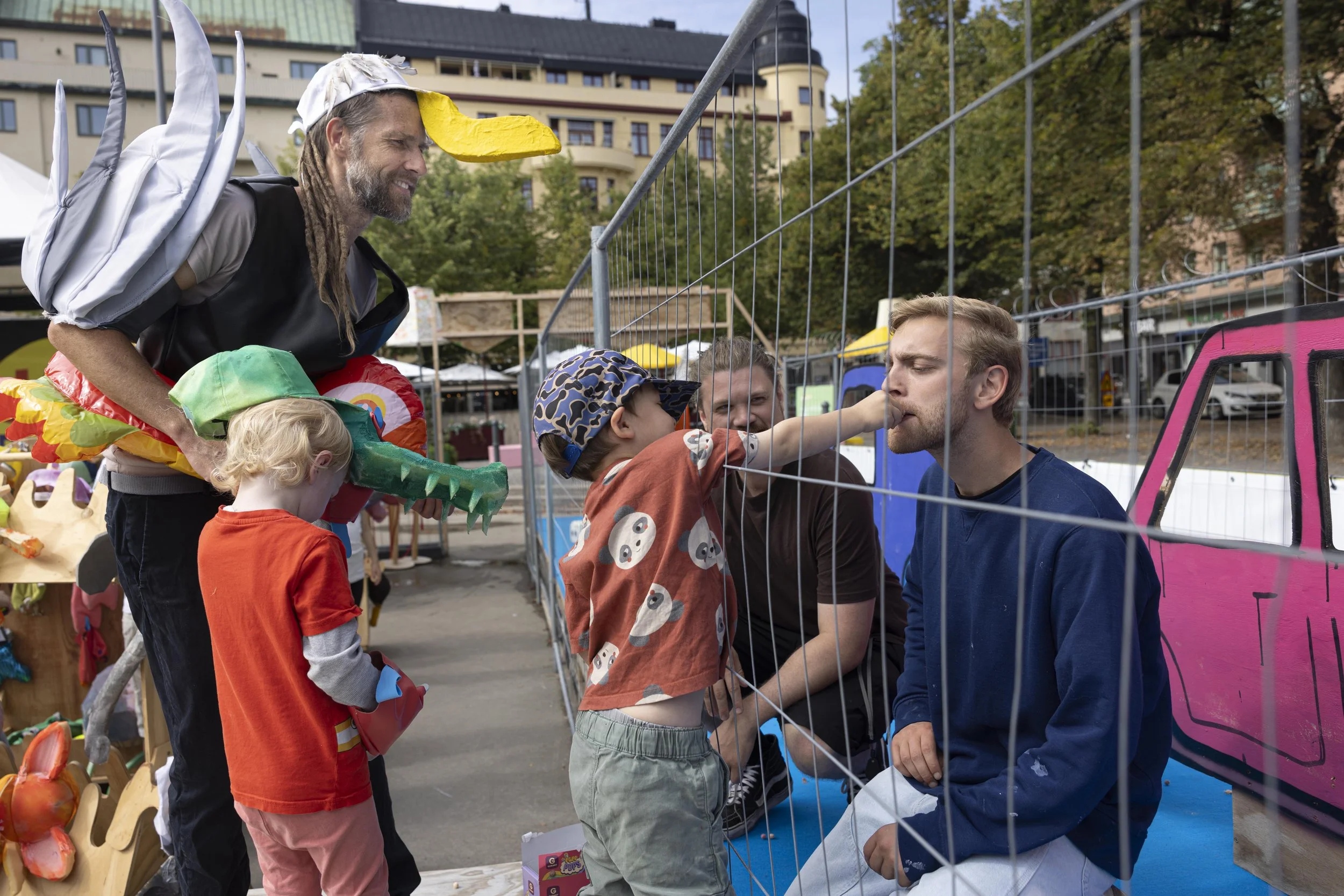
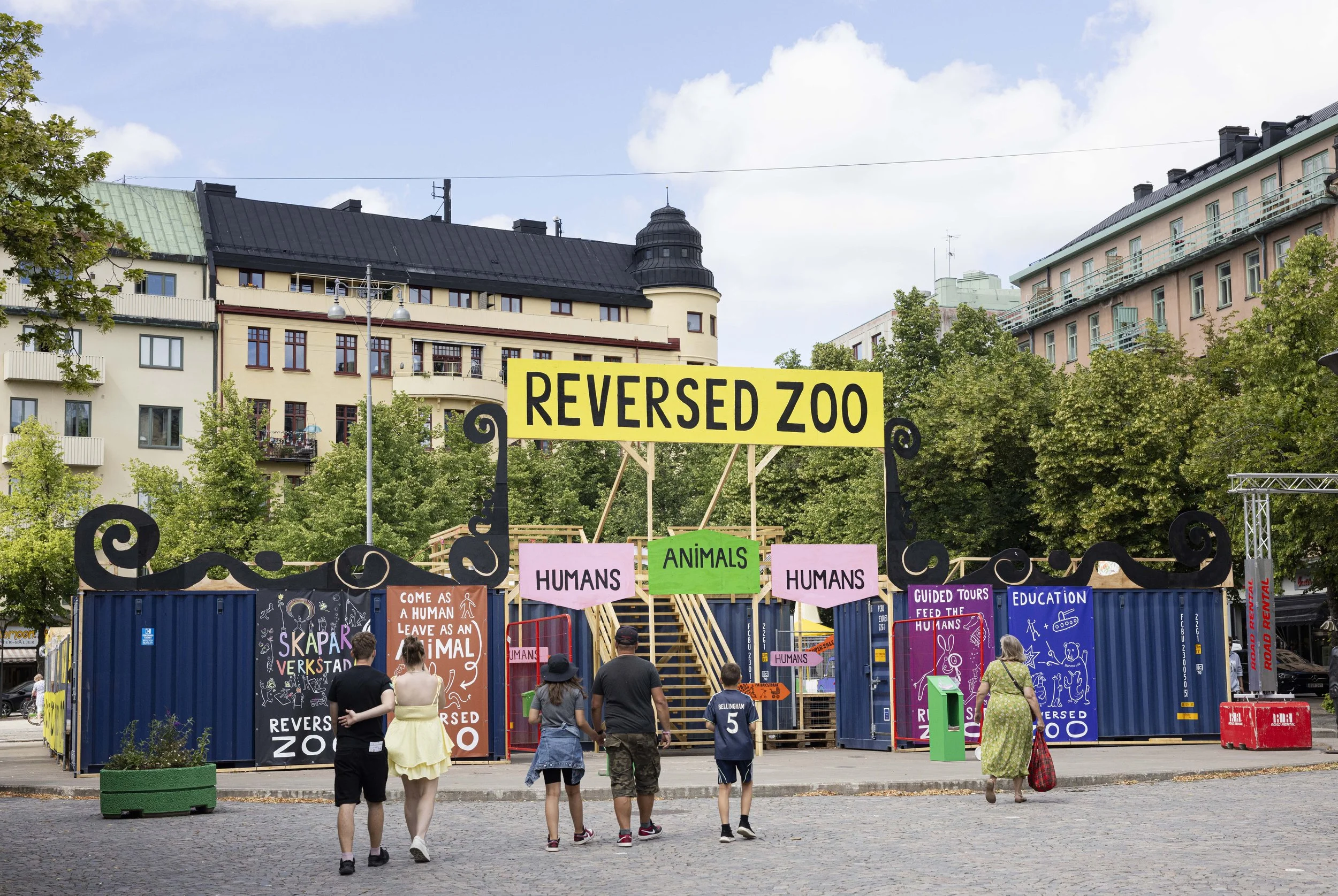
At Reversed Zoo, visitors choose: enter the cages as humans, or become animals and move freely through the zoo.
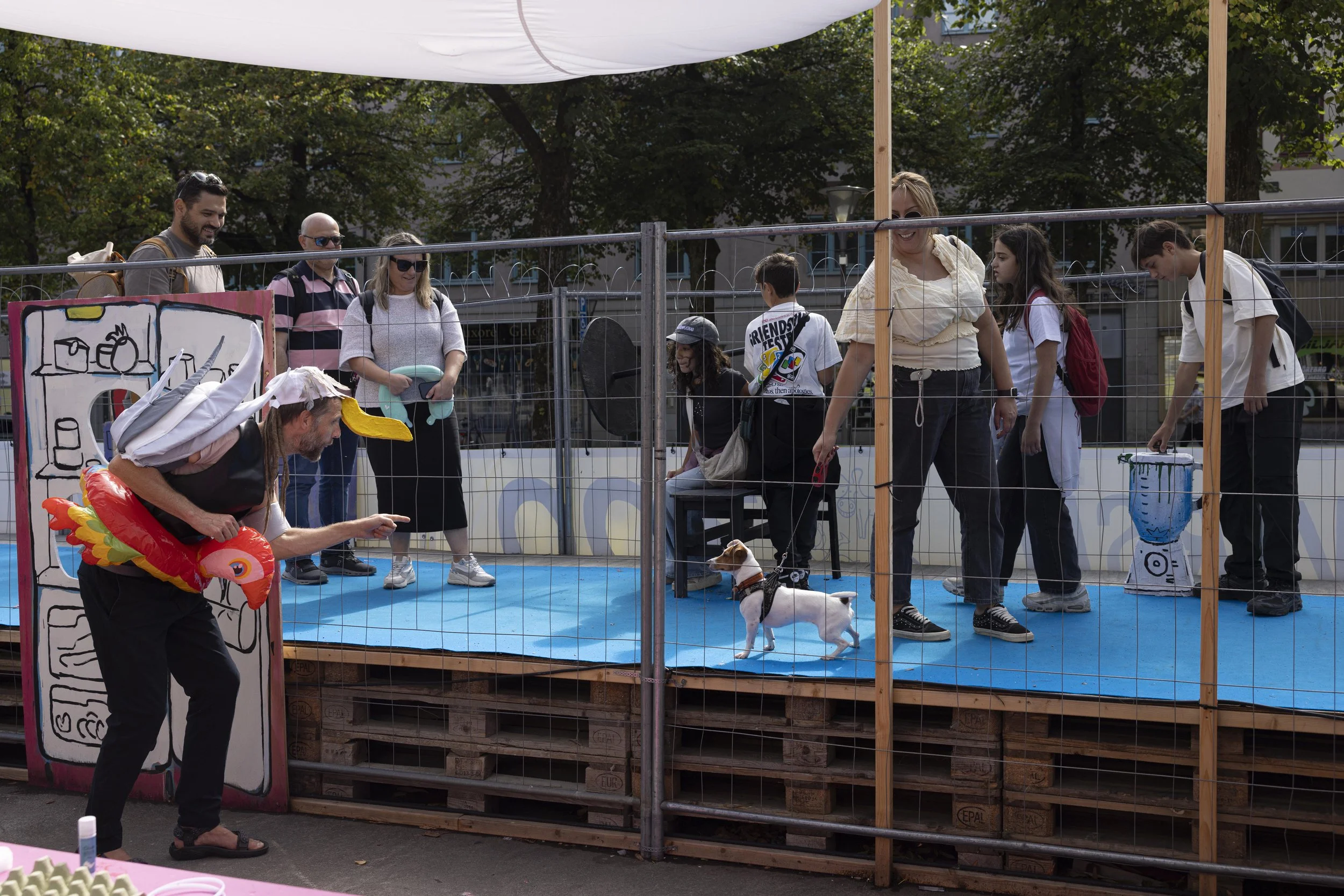
The human enclosures contain washing machines, vacuum cleaners, furniture and other familiar comforts. Outside, animals watch the humans.
Why are humans always on top?
Building the zoo
We built Reversed Zoo in central Örebro from Euro pallets, shipping containers and temporary building fences. The result was a three-dimensional playground of cages, towers and passageways, where the usual relationship between humans and animals was turned upside down.
Three months at OpenArt
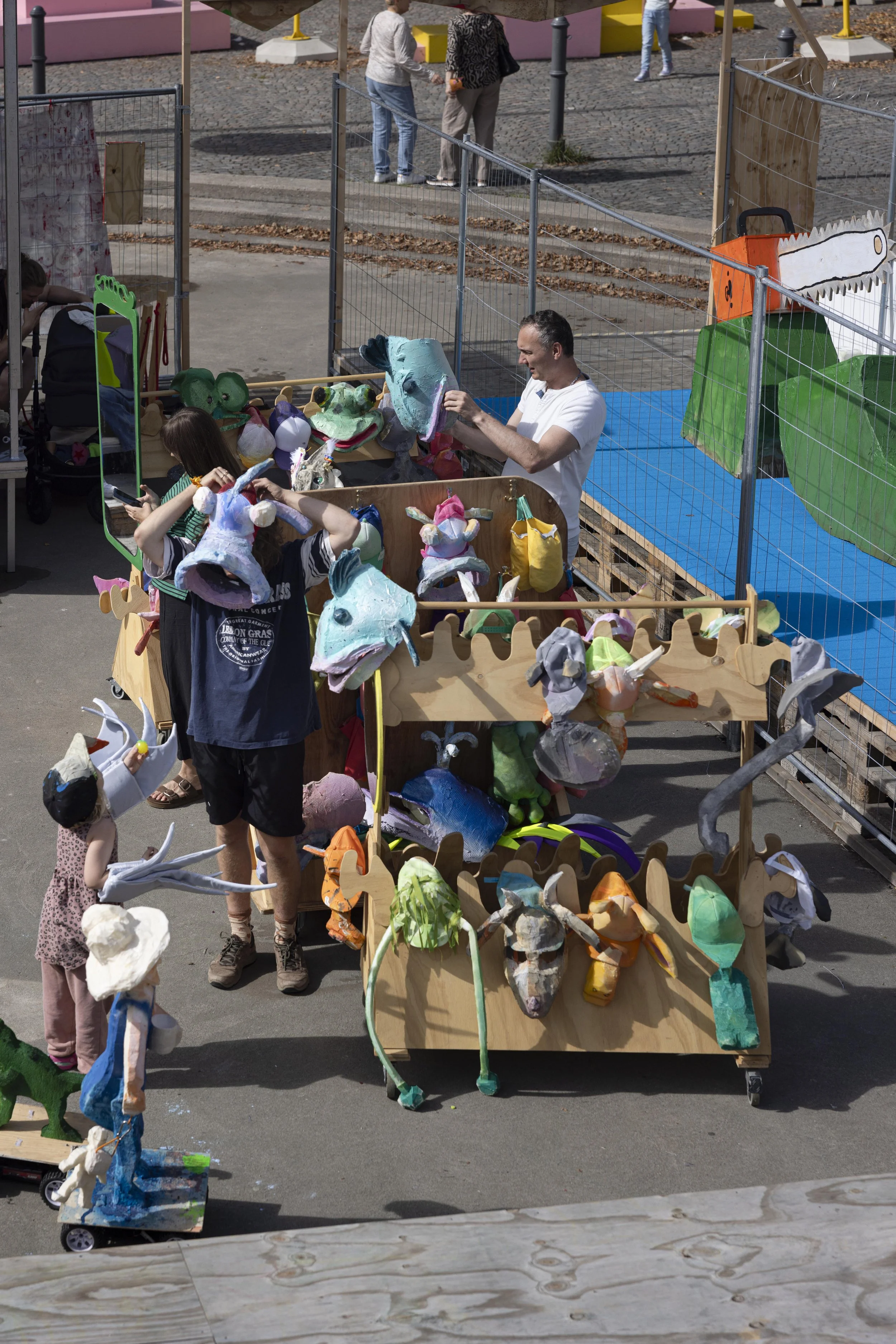
OpenArt’s educational department moved its creative workshop into the zoo. Visitors made masks, ears, wings and fur, then entered as animals.
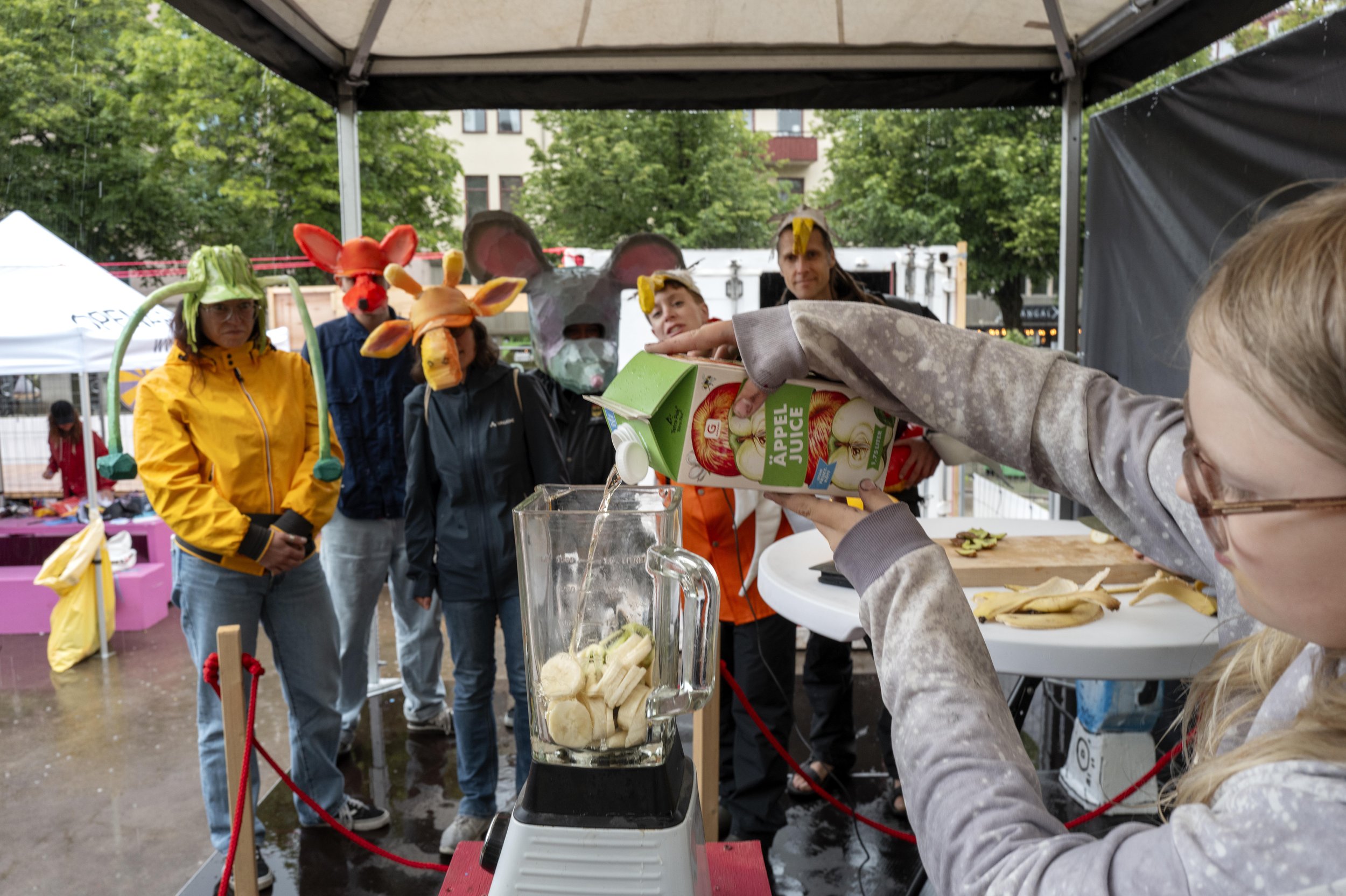
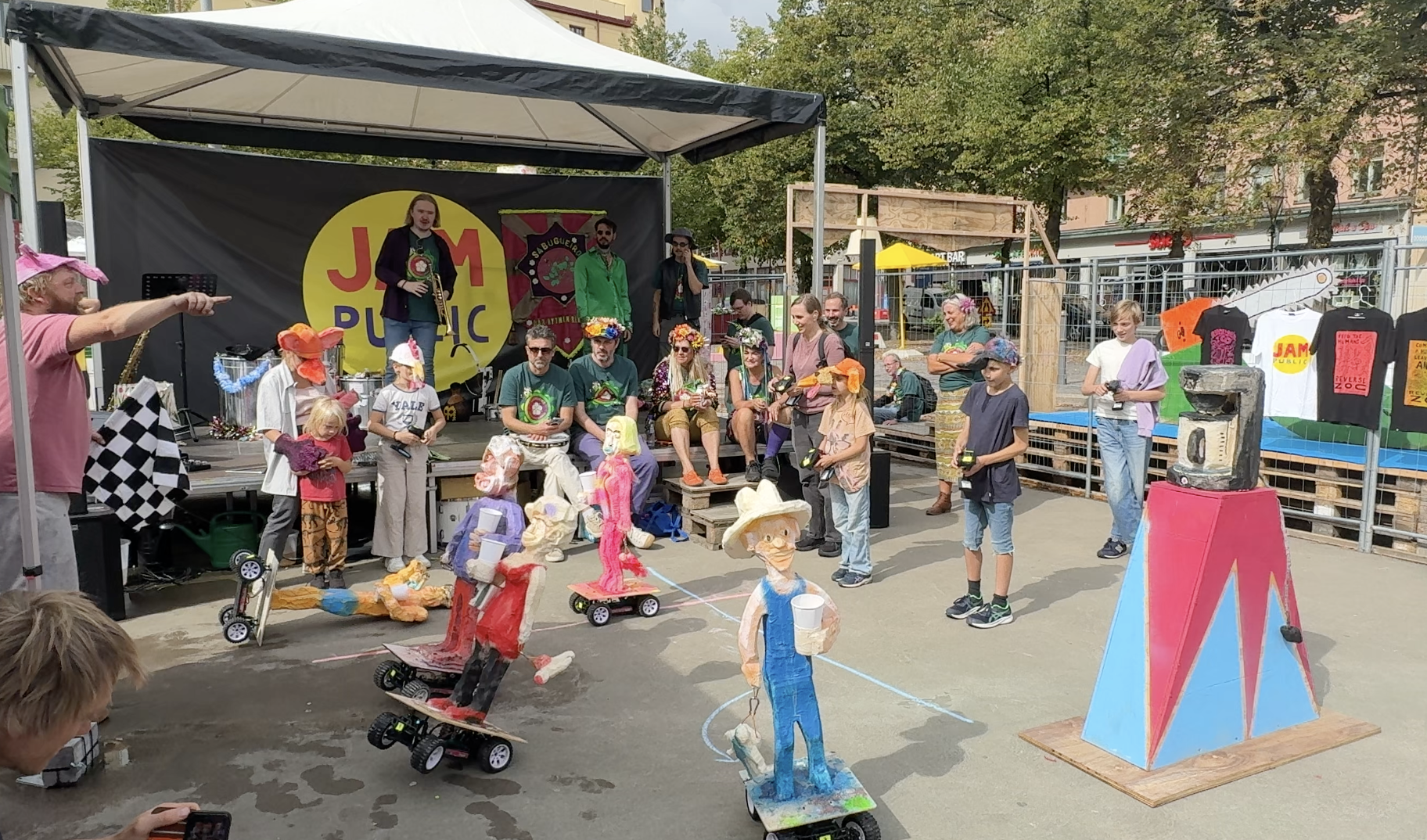
Throughout the three-month exhibition, the zoo became a setting for performances, workshops, guided tours and unexpected encounters. Almost 26,000 people visited.
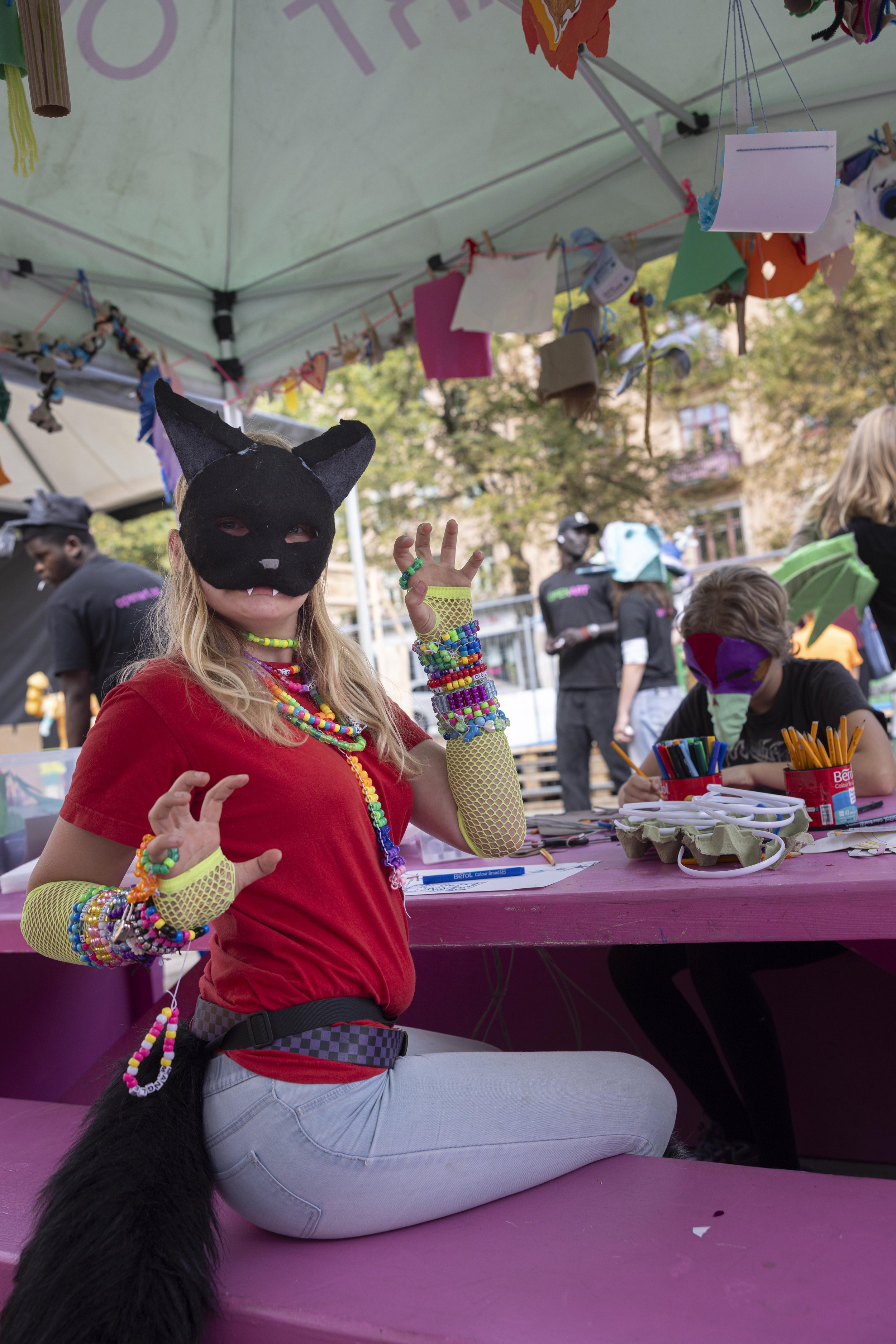
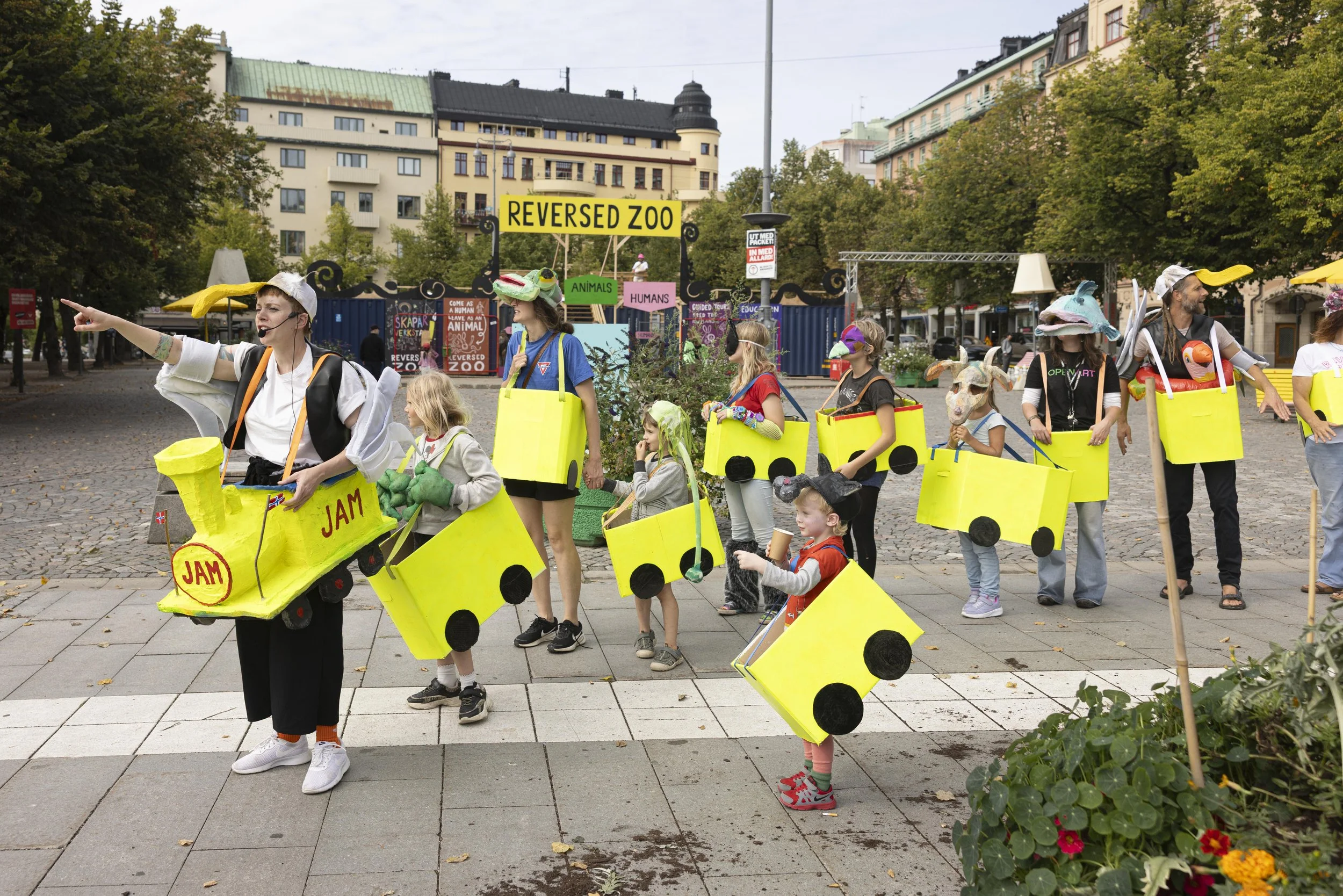
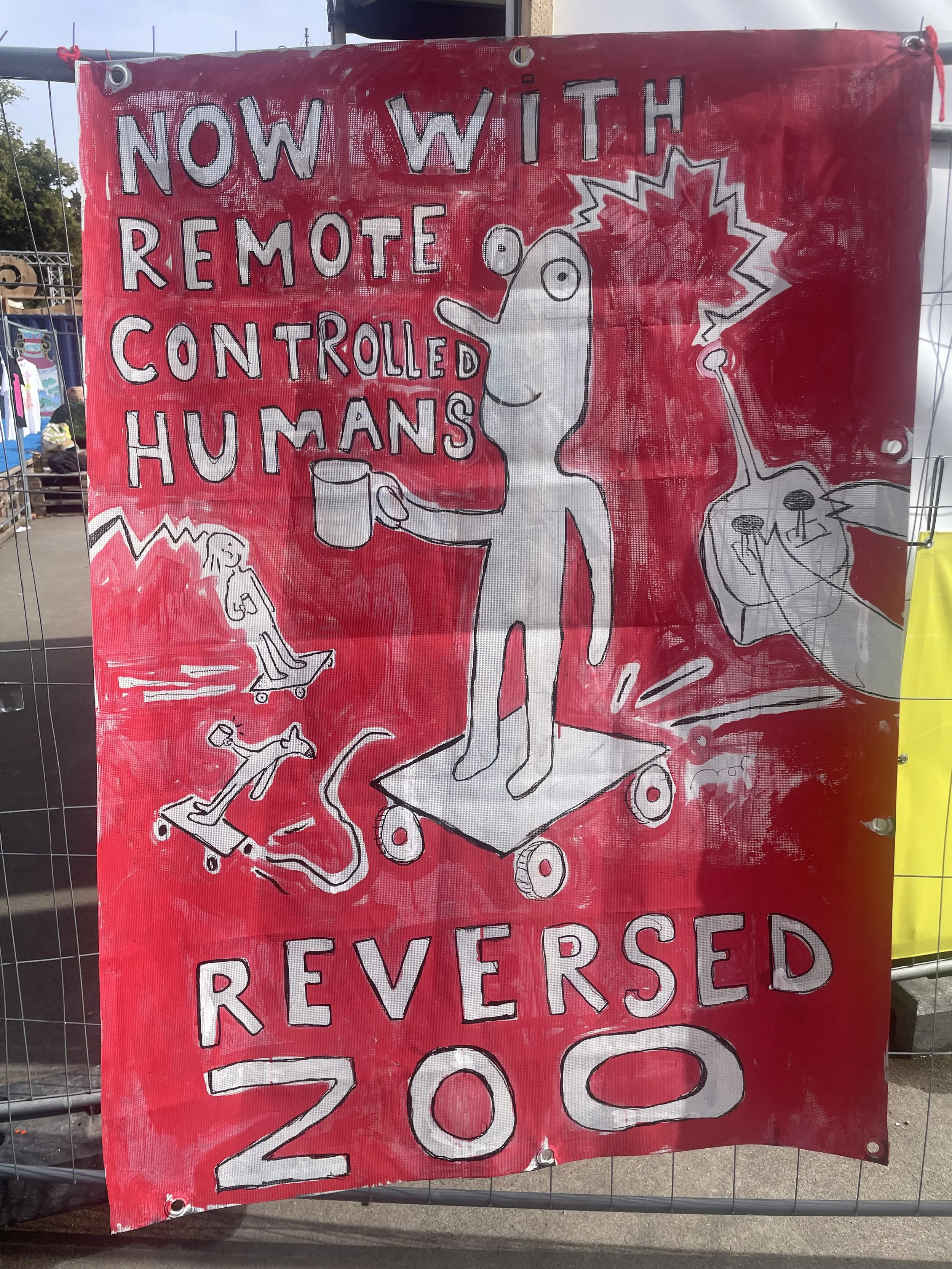
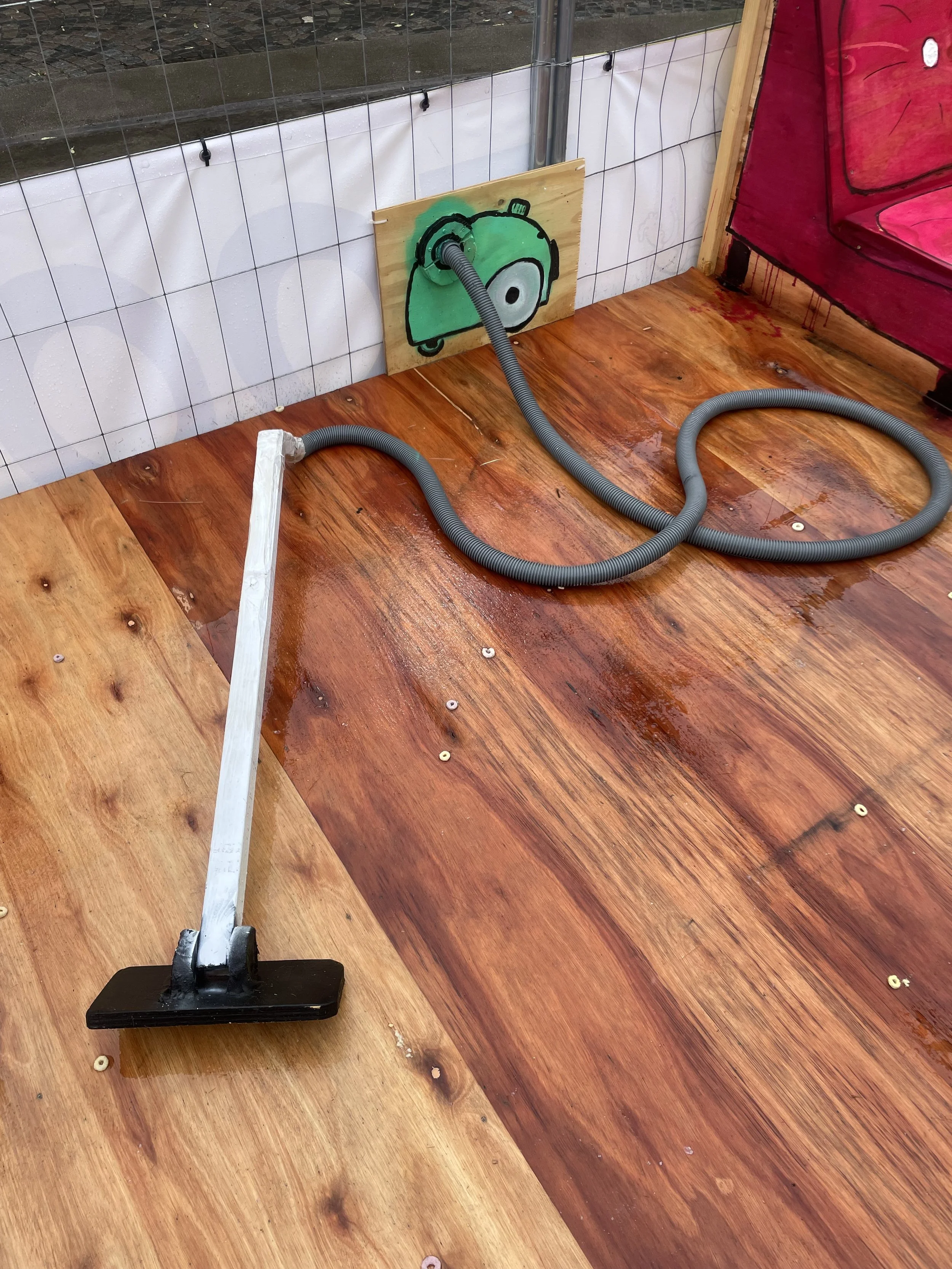
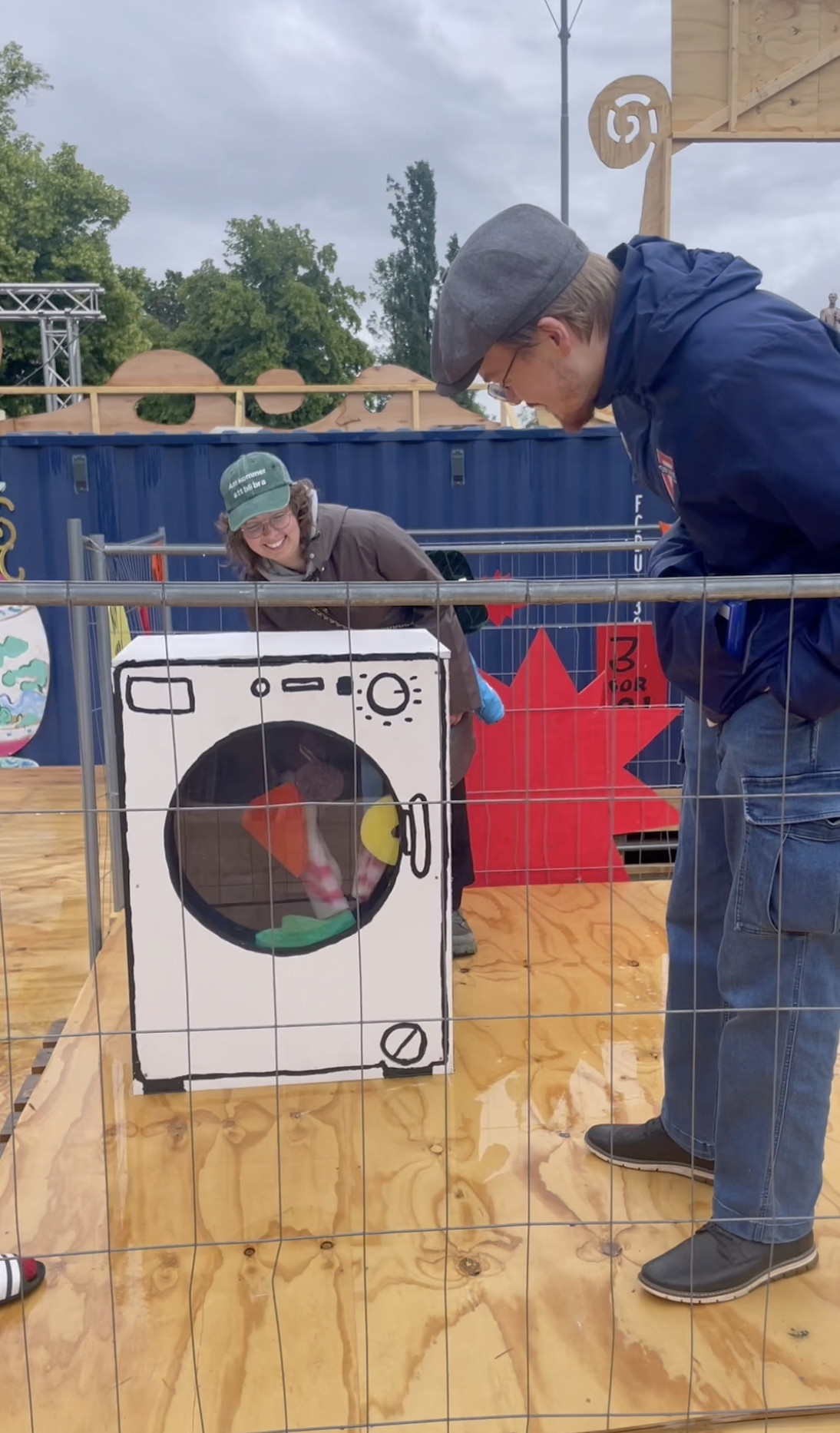
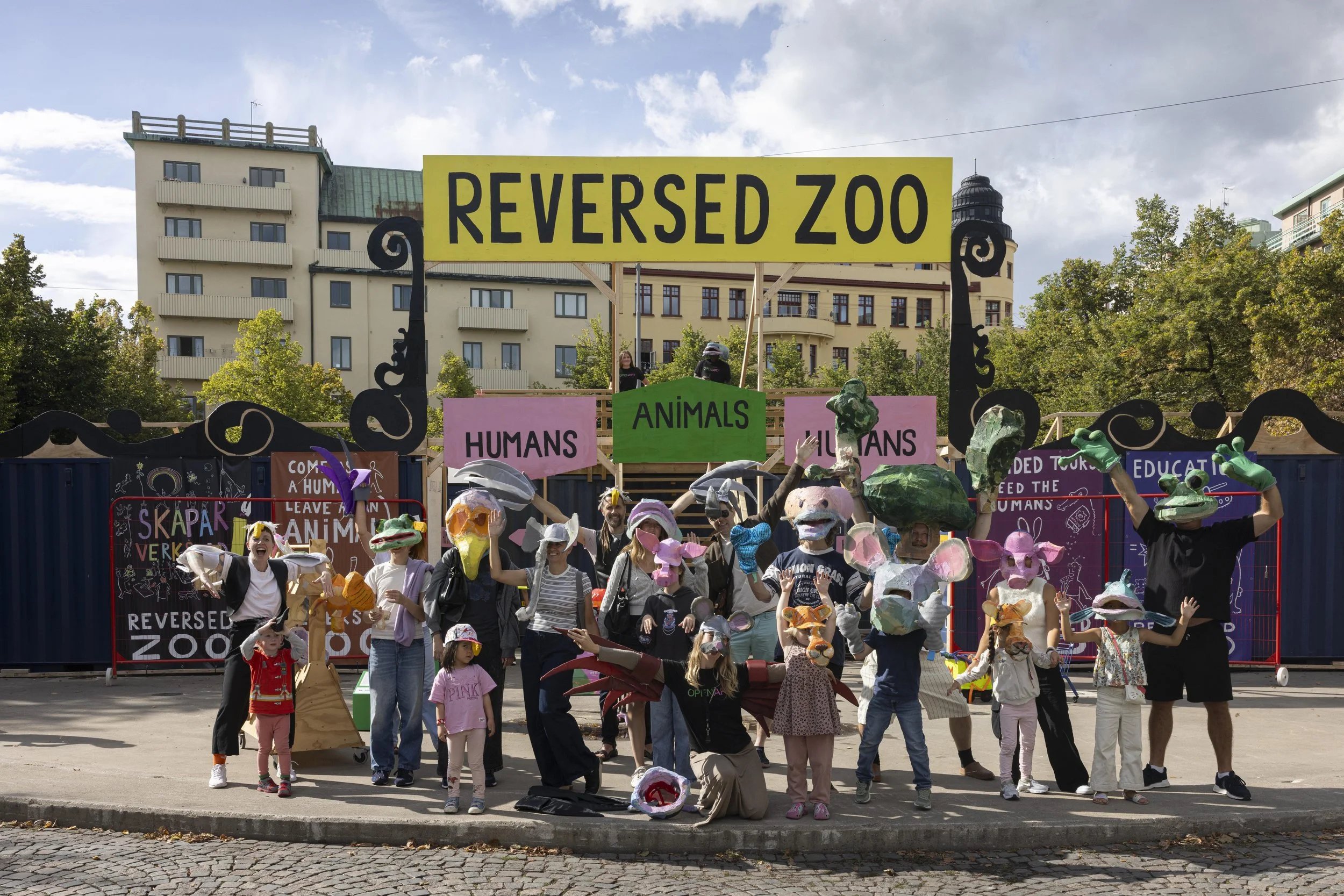
Reversed Zoo was a large-scale participatory public artwork — both a sculpture and a social space. Its architecture, rules and costumes created a world that visitors could enter, inhabit and change. What happened inside was never entirely in our hands.
In her review of OpenArt, Viveka Kjellmer described Reversed Zoo as the biennial's most interactive work, adding:
“Utan besökare, inget zoo.” / “Without visitors, no zoo.”
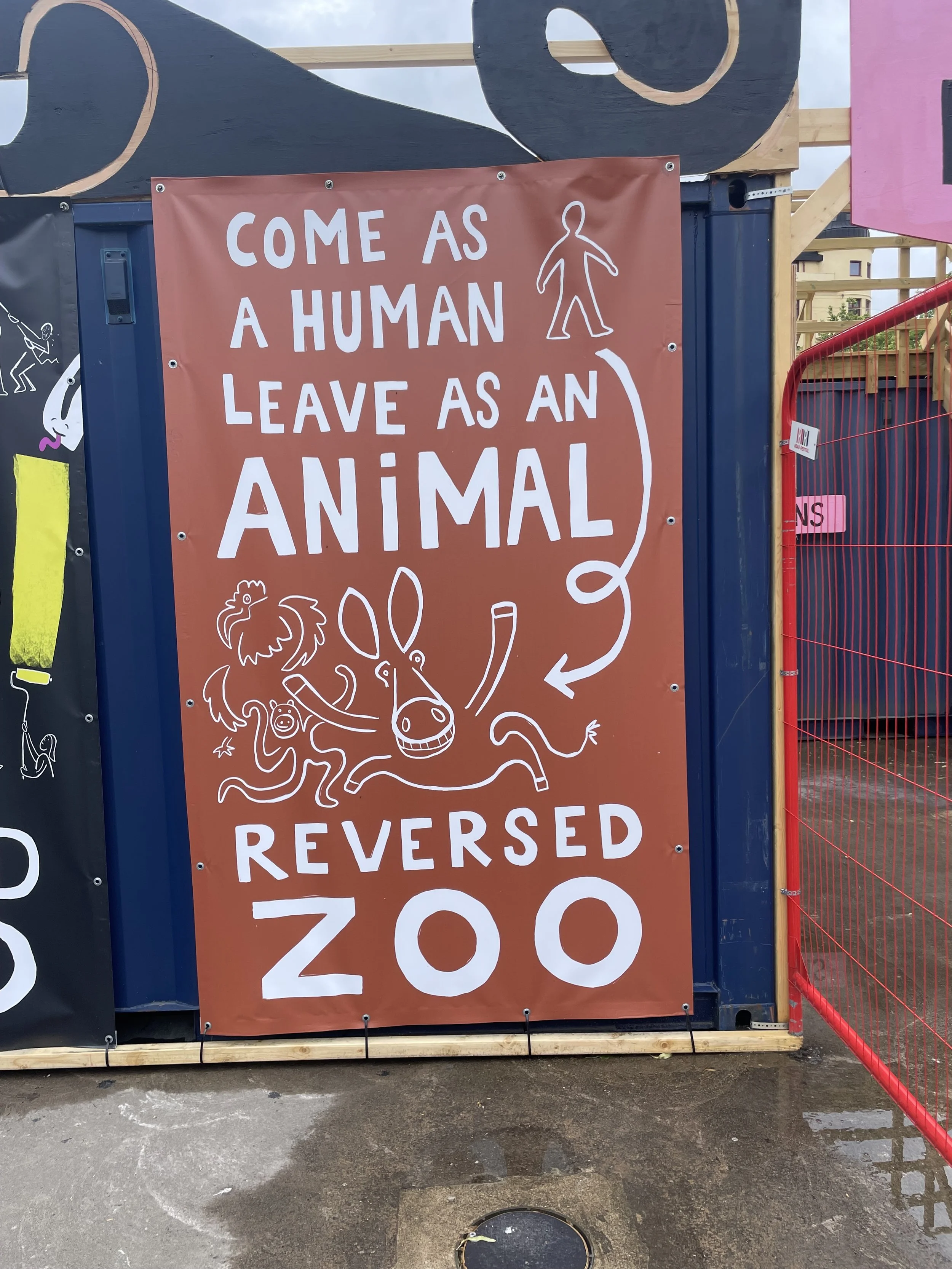
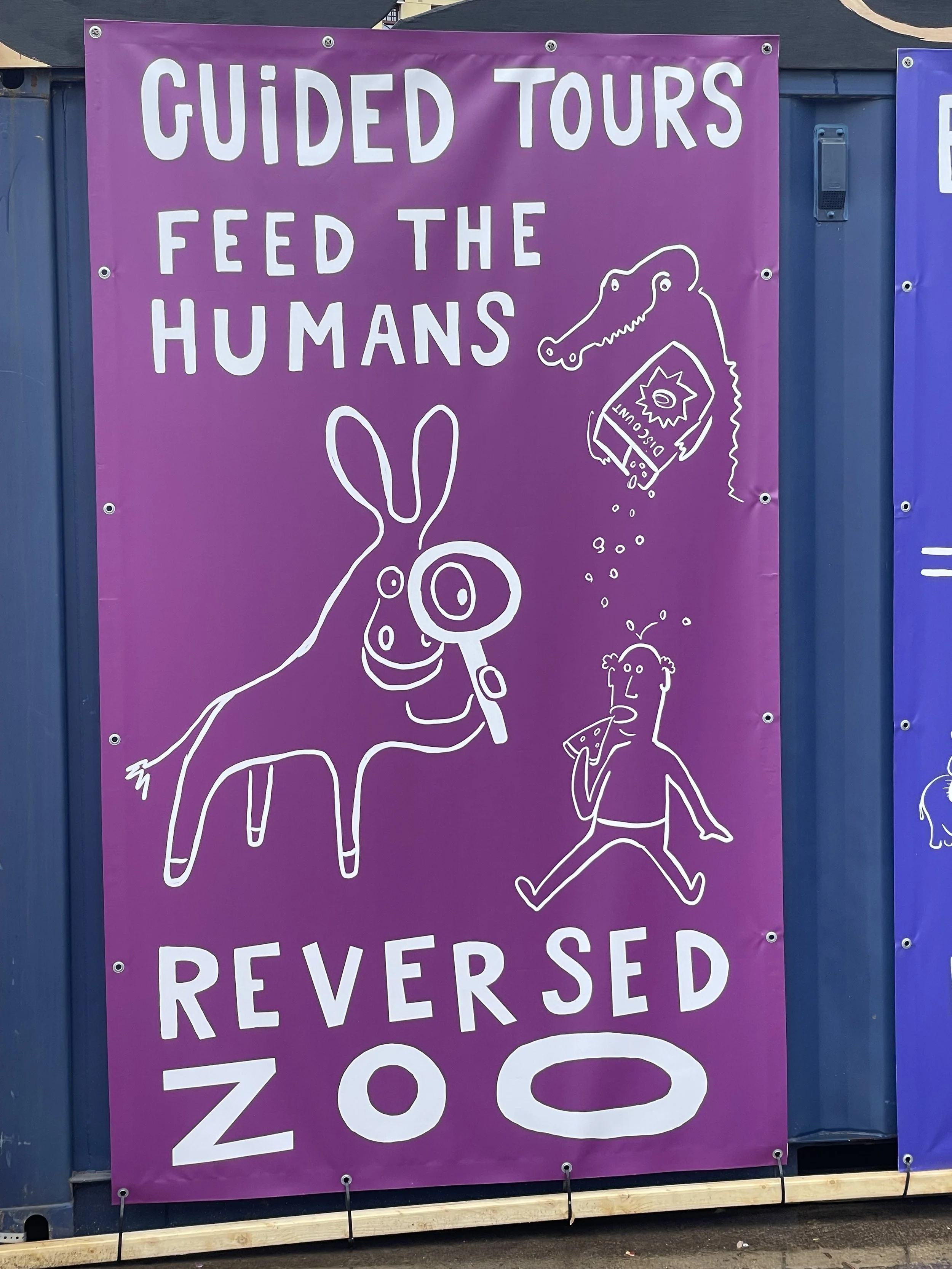
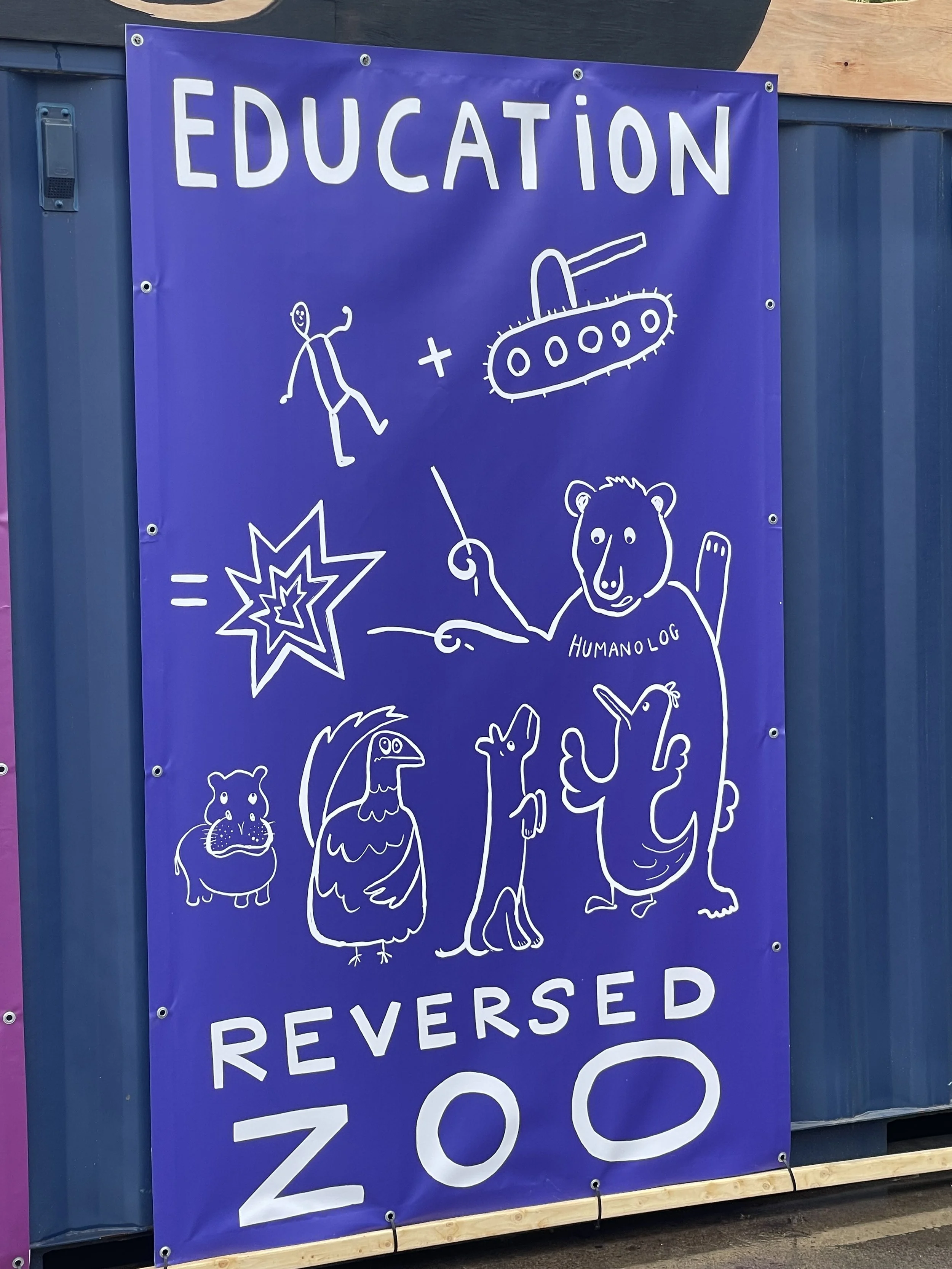
Signs, instructions and graphic materials extended Reversed Zoo beyond the physical structure, giving the temporary world its own visual language.
Project information
Reversed Zoo
OpenArt 2026
Järntorget, Örebro, Sweden
Materials: Euro pallets, shipping containers, temporary building fences, costumes and scenography
By JAM PUBLIC. Developed in collaboration with OpenArt and its educational department.
This reel has over 867K views on Instagram.
